Datalink in Europe currently
Datalink in Europe has never been simple. A patchwork of national rules, mixed aircraft capabilities, and the ever-changing Logon List has meant a constant shifting landscape for pilots and dispatchers. Now the Datalink mandate is on the horizon, a sweeping digital change that is intended to automate access to European airspace and bring everyone under one simplified umbrella.
Negotiating all these changes can be confusing, and we need to be prepared for the changes that are about to be implemented.
So, what Is CPDLC and How Does It Work in European Airspace?
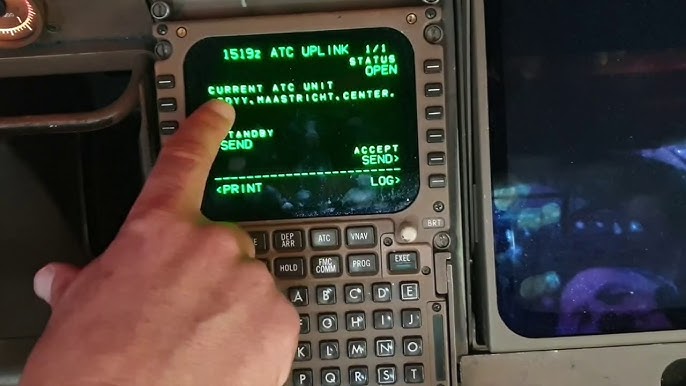
Controller Pilot Data Link Communications or (CPDLC) for short lives up to its very simple name. It is a digital system that allows European air traffic controllers and pilots to exchange structured text messages. The current air traffic system still has a reliance on traditional voice radio communications. As you can imagine, with increased traffic in the sky and multiple languages in the region this reliance could lead to complications. CPDLC on the other hand acts as a pre-written series of commands that is widely used for transmitting operational messages such as route clearances, altitude changes, and airspace handovers.
What are the Key Benefits to using CPDLC?
- Reduces Radio Frequency Congestion: Text-based messaging frees up busy VHF radio channels in high-traffic regions like Western Europe.
- Enhances Safety and Efficiency: Structured messages lower miscommunication risks, crucial in Europe’s multi-lingual control centers.
- Increased Operational Capacity: EUROCONTROL studies show up to 10% more capacity when 75%+ of traffic uses CPDLC
- Meets EU Regulations and Standards: Compliance with mandated technical and operational standards ensures interoperability across European states.
Is CPDLC Mandated in Europe? What Are the Regulatory Requirements?
As of February 2021, the European Data Link Mandate requires most IFR flights above 28,500 feet to use CPDLC via ATN VDL Mode 2. Exemptions exist for certain non-commercial, delivery, and humanitarian flights. If you don’t have datalink capabilities and have no exemption you are unable to fly above FL28,500. In 2027 this is set to change further. The CP1 mandate (Common Project One, EU Regulation 2021/116) is set to have a major impact on the adoption and advancement of CPDLC. The CP1 mandate states that major ATM stakeholder in Europe must implement, upgrade, and harmonize CPDLC capabilities. This shifts CPDLC from a desirable modernization step to a mandatory operational standard for Air Navigation Service Providers (ANSPs) and operators.
How Is CPDLC Implemented Across European Countries?
CPDLC is operational in most European Flight Information Regions (FIRs), including major hubs like Maastricht UAC, UK, France, Germany, and Switzerland. Each country implements CPDLC in coordination with EUROCONTROL guidelines, and some regions maintain equipment whitelists to ensure compatibility and reliability. Before entering European airspace, pilots must check the latest operational bulletins and technical requirements for their intended destinations.

What Are the Technical Standards for CPDLC in Europe?
Europe uses ATN (Aeronautical Telecommunication Network) CPDLC via VDL (VHF Digital Link) Mode 2. Aircraft must be equipped with certified avionics capable of connecting to European ground stations. Unlike North Atlantic operations (which use FANS 1/A CPDLC), European CPDLC requires compliance with specific data formats and transmission protocols for interoperability. Updates in 2025 include maximum uplink delay requirements and improved reliability metrics.
How Do Pilots and Air Traffic Controllers Use CPDLC in European Operations?
Before flight, pilots initiate a CPDLC logon to connect with European ATC systems. During flight, controllers transmit instructions, clearances, and rerouting via standardized digital messages. Pilots reply with pre-set responses, ensuring clarity and reducing the risk of miscommunication. If CPDLC connectivity is lost, crews revert to voice radio procedures as per EUROCONTROL protocols.
What Are the Key Differences Between CPDLC and ACARS in Europe?
CPDLC is exclusively used for ATC communications, focusing on clearances and instructions sent between controllers and pilots. ACARS (Aircraft Communications Addressing and Reporting System), by contrast, manages a wide range of messages between airline operations centers and flight crews—including maintenance, dispatch, and load control. Both systems may be installed on European aircraft, but only CPDLC fulfills the mandatory ATC requirements at high altitude.
Where Can I Find Official Guidelines and Resources for European CPDLC Operations?
For the latest updates, requirements, and operational advice:
- Visit EUROCONTROL’s official website and recommended practices documentation
- Consult national air navigation service providers for technical updates and whitelists
- Refer to authoritative industry guides such as Skybrary and ICAO documentation for in-depth CPDLC procedures
You can find out more about how Airtel ATN can help with CPDLC here